Social media and marketing produce conversions when each channel handles the job it's actually built for. Organic social builds the trust that paid search assumes you already have. Paid search captures the intent that social creates but can't close on its own. Running them in the right sequence closes the gap between a prospect discovering your business and actually picking up the phone.
Key Takeaways
- Organic social is a trust layer, not a direct lead engine. Treating it as a conversion tool misreads what the channel is designed to do.
- The combination of social proof and search intent capture is what moves people from awareness to action. Neither channel does it fully on its own.
- Paid social builds speed and fills a retargeting pool. Organic content builds depth and durability. Running them together produces compounding results over time.
- Attribution gaps cause businesses to cut social spend before the retargeting pool is large enough to show returns. The mechanism that was quietly working disappears from the system.
- A damaged reputation profile will undermine any paid campaign before it has a chance to perform.
Why Does Organic Social Alone Fail to Convert?
When someone finds your business on Instagram or Facebook, they're in discovery mode. They haven't typed a search query. They haven't raised their hand to say they need what you sell. They're scrolling through content that interrupted their day, and the mental state that produces a purchase decision isn't there yet.
The low conversion rate from organic social to a booked appointment isn't a sign that the content is failing. It's the channel working exactly as designed. Organic society earns its place in the middle of the funnel by answering the silent objection every prospect carries: "But are they actually any good?"
Consider a situation that plays out regularly for local service businesses. A company runs Google Ads and gets a solid volume of clicks, but the rate from click to booked appointment stays stubbornly flat. The issue often isn't the ad copy or the bid strategy. It's that the prospect arrives at the page without any prior exposure to the business. There's no social proof, no visual evidence of completed work, and no sense that other people have already made this decision and been satisfied with it. The prospect is evaluating from a standing start, and that psychological distance costs conversions.
When that same business builds a consistent social presence that shows real work, responds to client questions publicly, and posts content that demonstrates competence, the trust gap shrinks before the prospect ever clicks an ad. The ads themselves haven't changed. What's changed is the infrastructure of credibility surrounding them.
This is also why review generation and reputation management sits directly inside this conversation. Your review profile and your social content are both answering the same question from the same prospect, just on different surfaces and at different stages of the decision.
What Actually Creates the Conversion Lift?
The lift comes from a specific sequence, and most businesses don't run that sequence in the right order.
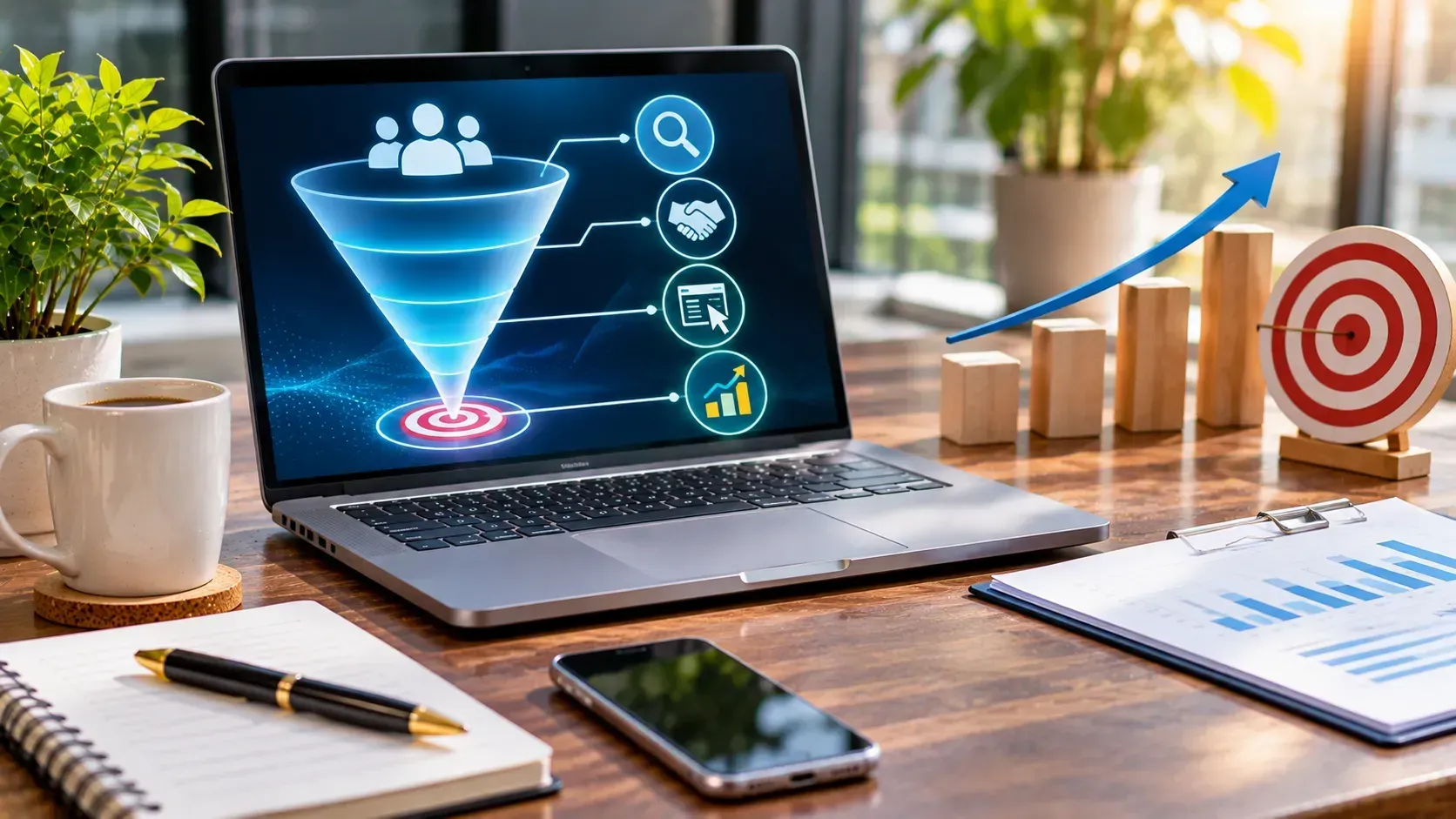
Here's how the conversion sequence works: social media creates brand familiarity and accumulates social proof. Retargeting re-engages people who've already encountered your brand but didn't take action on first contact. Search ads or local SEO captures the moment those same people express explicit purchase intent. A conversion-focused landing page closes the action.
Each step is weaker without the one before it. Familiarity reduces perceived risk. Every additional touchpoint where a prospect sees consistent, credible content lowers the psychological cost of making a decision. By the time they reach your landing page, they're not evaluating you from scratch. That's the mechanism behind genuinely improved conversion rates: not optimizing one channel in isolation, but building the full sequence so each stage does its part.
There's a real attribution challenge buried here, too. A prospect may encounter your business multiple times on social media before a search interaction produces the visible conversion event. When attribution only captures the final click, the social touchpoints that built the trust making that final click possible look invisible in the reporting. Businesses read that as social being unproductive, cut the spend, and the trust-building mechanism quietly disappears from the system. Conversion rates on the remaining paid channels then soften, and the connection isn't obvious because it was never visible in the first place.
Which Approach Fits Your Business Right Now?
The right channel mix depends on where your business actually is, not where you'd like it to be. Here's a breakdown of the main approaches and the conditions under which each one genuinely works.
| Approach | Best For | Realistic Timeline | Biggest Risk |
|---|---|---|---|
| Organic social only | Long-term trust building and brand awareness | Several months before meaningful conversion impact | Treating engagement metrics as lead indicators |
| Paid social (Facebook/Instagram) | Local businesses with a defined offer and tight geographic target | A few weeks to a few months to find and optimize | Burning budget before the creative is properly tested |
| Social plus SEO integrated | Businesses ready to invest in compounding growth | Several months for organic lift to become significant | Underestimating the content volume and consistency required |
| Social plus Google Ads | Businesses with immediate lead needs and a proven offer | Weeks to first conversions | High cost-per-click when the trust layer isn't in place yet |
For a local service business competing in a defined geographic area, running paid social and organic content simultaneously tends to produce faster compounding results than starting one and adding the other months later. Paid social generates immediate data, builds the retargeting pool, and identifies what creative and offer combinations resonate. Organic content accumulates the trust layer that progressively reduces cost-per-acquisition over time.
That said, the right starting point depends on the specific business, its offer, and what competitive pressure it faces locally. UPM Digital Media's process begins by understanding each client's situation before recommending a channel mix. That diagnostic step isn't optional. If you're running Google Advertising without a social trust layer in place, you're paying full price for a fraction of what the campaign could return.
Is Paid Social Worth It for Local Service Businesses?
Paid social is the fastest path to a local audience and also the easiest place to waste budget if the creative and targeting aren't built for conversion from the start.
The mistake most local service businesses make with Facebook and Instagram ads isn't the budget level. It's the offer. Vague brand-statement ads don't convert because they don't answer any specific question the prospect is already asking. An ad that describes the exact situation your prospect is in, names the problem clearly, states the solution, and removes a friction point closes the psychological distance between seeing the ad and taking action. Specificity is the conversion mechanism in paid social.
This is where Facebook advertising and Local Service Ads serve genuinely different purposes. Facebook builds and warms an audience. Local Service Ads capture that same audience at the moment it's ready to act. Running one without the other means you're either building an audience you can't close or closing an audience you haven't warmed. Both directions carry real cost.
What This Approach Won't Fix
Social media and marketing integration won't rescue a business with a weak offer, a website that doesn't load properly on mobile, or a reputation profile that's actively working against conversions.
Consider a situation where a business's Google Business Profile carries a low average rating with several unanswered negative reviews. Paid social in that scenario accelerates traffic to a trust problem rather than solving one. The ads do exactly what they're supposed to do. They deliver impressions and clicks. What they can't do is remove a conversion barrier that exists before the prospect ever reaches the landing page. That trust problem has to be addressed first, and it's exactly what review generation and reputation management is built to address.
The same logic applies to the website itself. A slow, mobile-unfriendly, or confusing landing page will convert paid social traffic at a fraction of what it should. Every prospect who clicks through, arrives, and leaves with a negative impression has been warmed by your ad and then cooled by the landing experience. A winning website is a prerequisite for any paid traffic channel to perform at its potential, not an optional upgrade to add later.
Acting Now vs. Waiting: What the Real Cost Comparison Looks Like
| Situation | What Happens Next |
|---|---|
| Acting now with UPM Digital Media | Sequence built correctly from the start: trust layer, retargeting pool, and conversion infrastructure developed together with a dedicated local account manager who knows the competitive landscape you're actually operating in |
| Waiting to "test" organic social first | Retargeting pool hasn't started building. Paid campaigns launch later with no warm audience and no trust signals in place, meaning higher cost-per-lead from day one |
| Running ads without a strategy or trust layer | Budget spends into a cold audience with no conversion infrastructure. Cost-per-lead climbs as the algorithm optimizes on poor-quality data |
| Managing it in-house without the expertise | Channel mix tends to be based on what's familiar rather than what fits the stage of the business. The result is often organic social without the paid amplification that makes it compound |
UPM Digital Media has spent over 25 years building conversion systems for local businesses.
Every client gets a dedicated account manager with on-the-ground knowledge of their local market. The team includes growth-driven local marketing experts residing in nearly every US state, which means the person building your campaign understands the competitive landscape you're actually operating in, not a generic version of it.
Their pay-per-result SEO model runs at $650 to $950 per month when ranked, with no payment if the rankings don't materialize. That structure exists because the agency's compensation is tied directly to whether the work produces results. Clients stay with UPM Digital Media for years, not because of contracts, but because the results justify it.
For a clearer picture of how your current digital presence is performing across all channels, contact UPM Digital Media before making any channel decisions.
Frequently Asked Questions
How long does it take for social media marketing to show up in actual conversions?
Paid social can produce measurable results within weeks when the targeting, creative, and offer are structured correctly from the beginning. Organic social takes longer because it works through repeated exposure and accumulating trust signals. For most local businesses, running both simultaneously produces the fastest compounding results. Paid social generates immediate data and fills the retargeting pool while organic content builds the trust foundation that progressively reduces cost-per-acquisition.
Do I need a large social following for social media to help my conversion rate?
No. A small, locally concentrated, engaged following converts better than a large diffuse one for any local service business. A few hundred followers who are all within your service area are worth more than thousands spread across the country. The goal isn't audience size. It's audience relevance and the trust that consistent, credible content builds with people who could actually become your customers.
Is Facebook advertising still worth it for local businesses?
Yes, for businesses with a defined local offer and a clear geographic target. Facebook's advertising platform offers detailed local targeting that includes radius settings, demographic filters, and behavioral signals. A well-structured campaign built around a specific local offer still performs strongly for service businesses trying to reach a defined audience in a defined area, provided the creative is built for conversion rather than general brand awareness.
What's the difference between social media marketing and social media management?
Social media management is posting content on a schedule. Social media marketing is building a system where that content, combined with paid amplification and retargeting, moves people toward a specific conversion action. Most businesses pay for management and expect marketing results. Marketing requires a strategy that connects content to a conversion goal, with a clear mechanism in place for how that goal gets reached. Management is execution. Marketing is the architecture that makes execution produce outcomes.
Why does my social media get engagement but no leads?
Engagement measures content resonance, not purchase intent. People engage with content that entertains or informs them. They convert when they have a specific need and trust that you can solve it. If your content generates engagement but no inquiries, the most common explanation is that there's no clear, low-friction path to the next step built into the content. There's no offer, no call to action, and no bridge between "I like this post" and "I'm going to call them."
Should I fix my website before running social media ads?
Yes. Social ads send traffic to wherever you point them. A slow, mobile-unfriendly, or confusing website will convert that traffic at a fraction of what it should. Every prospect who clicks through, arrives, and leaves with a negative impression has been warmed by your ad and then cooled by the landing experience. A properly built website is a prerequisite for any paid traffic channel to perform at its potential.
How do I know which social platform is right for my local business?
The platform question is secondary to the audience question. Where does your specific customer actually spend time, and what are they doing when they're there? For most local service businesses, Facebook reaches the 35-to-65 demographic most reliably. Instagram works well for businesses where the work itself is visual, such as home renovation, landscaping, food service, or aesthetic services. LinkedIn is worth considering only when your target customer is a business decision-maker rather than a consumer. Start with one platform, build the system correctly, and expand once you have real data to guide the decision.
If your social media is generating activity but not appointments, the sequence is off, not the effort. UPM Digital Media has spent over 25 years building conversion systems for local businesses across the United States, with dedicated account managers who understand your specific market. Schedule a free 30-minute consultation and find out exactly where your current channel mix is leaving conversions uncaptured.
About the Author
Les Ong is a marketing consultant and entrepreneur with over 25 years of experience in the digital media space. He specializes in helping small to medium-sized businesses compete with larger brands using high-end marketing technology, with a particular focus on local search, conversion optimization, and pay-per-result SEO. Les founded UPM Digital Media and leads a team of growth-driven local marketing experts operating across nearly every US state.