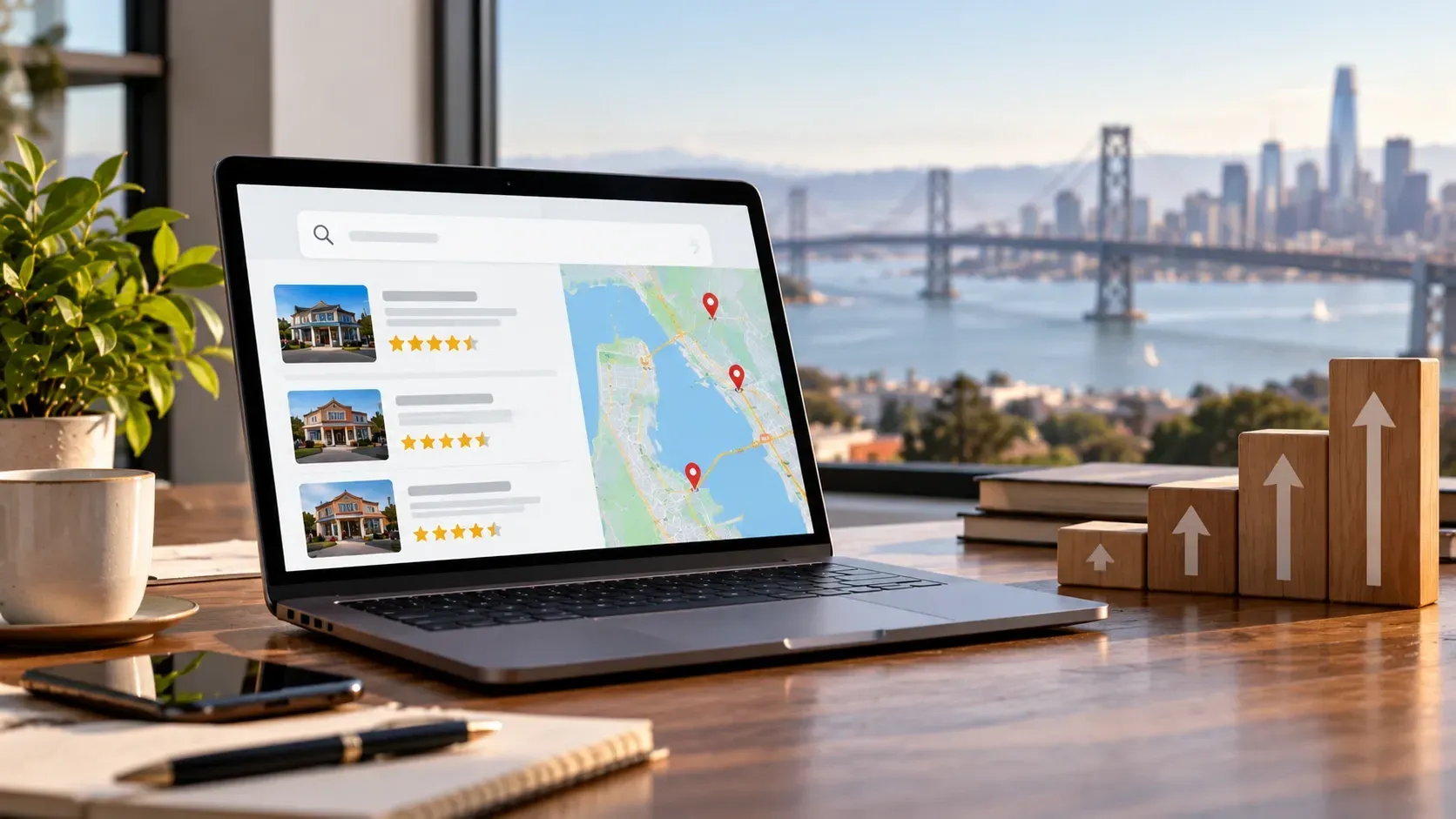
Review generation and reputation management solve different problems. They fail in different ways when neglected, and they require different tools to run well. For small businesses in El Granada and along the San Mateo County coastline, understanding which gap you're actually dealing with is the difference between a trust profile that drives calls and one that quietly sends buyers somewhere else.
Key Takeaways
- Review generation builds the volume and recency your profile needs to compete in local search; reputation management protects and amplifies what you've already built
- Small coastal markets like El Granada compress the competitive field, which means every trust signal carries more weight than it would in a larger city
- Running one without the other leaves your online presence structurally incomplete
- Inaction compounds over time because competitors are building trust signals while yours stand still
- UPM Digital Media offers a free 30-minute consultation to identify exactly where your trust gap is and what closing it is worth
What's the Real Difference Between These Two Services?
These two services aren't interchangeable. Businesses that treat them as the same category of problem tend to invest in the wrong one first, then wonder why the problem persists.
Review generation is proactive. It's the process of building volume and recency by turning satisfied customers into published reviews, at the right moment, on the right platform. It's a pipeline problem, not a response problem.
Reputation management is ongoing. It means monitoring what's being said about your business across Google, Yelp, Facebook, and industry-specific directories, then responding strategically, flagging inaccurate content, and making sure the narrative prospective customers encounter reflects your actual service quality.
Both show up in the same place: your Google Business Profile. That's why they get conflated. But the failure modes are entirely different. Generate reviews without managing them and you're building a one-sided conversation nobody's watching. Manage your reputation without a review pipeline and you're defending a foundation too thin to rank on, let alone convert from.
You can't manage what isn't there.
Why Does This Matter More in El Granada Than in Larger Markets?
El Granada is a small coastal community on the San Mateo County coastline, and that geography shapes your competitive landscape in a specific way: the search radius is compressed.
When someone searches for a plumber, dentist, or HVAC contractor in El Granada, they're not scrolling past hundreds of listings. They're comparing five or six. That's an opportunity, but it's also a constraint. Every review you have carries disproportionate weight, and every review you're missing creates a visible gap against a short list of competitors.
In a market with two hundred contractors, a modest review count blends into the noise. In a market with six, that same count might be the weakest profile on the page. When one competitor has built strong volume with a high average rating and you haven't, a buyer scanning results can effectively decide before ever clicking into your listing.
This is exactly why your review generation and reputation management strategy matters more in small coastal markets than most business owners expect. The competitive margin is narrower, which means trust signals move the needle faster in both directions.
How Do You Diagnose Which Problem You Actually Have?
Before deciding where to invest, you need to identify your specific trust gap. Most businesses fall into one of four categories.
A volume problem means you have very few reviews on Google. No amount of reputation management compensates for a thin profile because there isn't enough signal for prospective customers to evaluate. Generation is the starting job.
A recency problem means you have reviews, but most of them are old. Google's local ranking system factors in how recently reviews were written because recency signals current service quality, not historical performance. A business with a solid overall count but reviews concentrated two or three years back can find itself outranked by a competitor with fewer total reviews and a more active recent stream.
A sentiment problem means your average rating is low. Sustained generation does contribute to improving it over time, but the deeper fix is identifying the operational pattern underneath the complaints and addressing it before more reviews reflect the same issue. Volume alone doesn't solve a service delivery problem.
A response rate problem means you have reviews but you're not responding to them. This is the most common and most overlooked gap. Prospective customers don't just read reviews. They read your responses. A professional, specific reply to a two-star review signals accountability in a way that a string of unacknowledged five-star reviews simply doesn't.
Knowing which category describes your current profile determines where your first investment goes.
What Actually Works for Getting More Reviews?
The friction point that keeps most El Granada businesses stuck is that asking for reviews feels awkward. That discomfort is real, but it shouldn't be the reason your review profile stays thin.
Consider a common scenario: a local service business finishes a job, the customer is visibly happy, and no one asks for a review. The customer moves on, the positive experience fades from memory, and the business adds nothing to its online presence. That's not a customer satisfaction problem. It's a timing and friction problem.
The mechanism behind effective review generation comes down to this: a customer who just had a positive experience is in a favorable emotional state, but that window narrows quickly. The further you get from the moment of service, the more that goodwill competes with the ordinary friction of daily life. Sending a direct link that goes straight to the review form, rather than asking someone to search for your listing and figure out where to click, removes the primary barrier between intent and action.
What changes the outcome isn't persuasion. It's reducing friction and tightening the timing. When that process becomes a system rather than an occasional hope, review volume builds consistently instead of sporadically.
UPM Digital Media builds that pipeline for you, including the follow-up sequences most business owners don't have time to set up or maintain. Every client is paired with a dedicated account manager who keeps the system running without requiring you to manage it manually. For context on how review activity fits into your broader local search performance, it's worth reading about what actually works for Google Business Profile optimization before you allocate resources.
What Happens When You Only Do One Without the Other?
The businesses that lose ground quietly in local search usually made the same mistake: they picked one side and skipped the other.
Consider what can happen with generation but no management: you build up a solid review count over several months. Then, imagine a disgruntled former customer leaves a detailed negative review. With no monitoring in place, you don't see it for weeks. By that point, it's the first thing every new prospect encounters, and it's sitting there without a response. That scenario isn't hypothetical in structure. It's the predictable consequence of running a pipeline with no monitoring attached.
The reverse failure is just as costly. With management but no generation: you're diligent about responding to every review, your responses are professional and specific, but your total count is still low. Your nearest competitor has built a profile that dwarfs yours. Attentiveness doesn't offset volume in local search rankings, and it doesn't close the gap on its own.
The businesses consistently showing up at the top of local results in small markets don't choose between these two. They run them as a single integrated system. Generation builds the foundation. Management protects it, amplifies it, and makes sure the signals you've worked to build don't quietly erode.
For more on how reputation activity connects directly to local search visibility, the article on how UPM Digital Media's reputation management approach works for local SEO walks through the specific mechanics in detail.
How Does This Compare to Other Approaches?
| Approach | Momentum Timeline | Compounds Over Time | What Inaction Actually Costs |
|---|---|---|---|
| Review generation with UPM Digital Media | Builds steadily once the system is running | Yes, reviews remain visible and active for years | Competitors extend their trust lead every week you wait |
| Reputation management with UPM Digital Media | Immediate for defensive response; builds conversion trust over time | Yes, consistent responses signal credibility to buyers reading your profile | Unanswered negatives become the first impression new prospects see |
| Going it alone without a system | Sporadic and unpredictable | No, inconsistency breaks any compounding effect | Missed review requests, unmonitored mentions, no follow-up |
| Paid ads without review support | Immediate traffic, but no trust | No, traffic stops the moment payment stops | Clicks that don't convert because the profile looks thin |
| Doing nothing | No forward movement | Compounding loss as competitors build what you don't | Competitors widen the gap every month |
Paid advertising stops working the moment you stop paying. Reviews keep working long after the customer interaction that created them. That's a compounding asset, one that makes every other channel more effective. When a prospect clicks your ad and sees a strong review profile, they convert. When they find an empty or outdated one, the decision has already been made.
If you're weighing where review and reputation work fits alongside your other digital investments, the pay-per-result SEO model UPM Digital Media offers is worth understanding in that same context.
When Is This the Wrong Starting Point?
Straight talk, because honesty is the only thing that makes this useful.
If your business has a genuine operational problem generating legitimate negative feedback, no review generation system fixes that. More positive reviews don't cancel a documented pattern of real complaints. If the experience you're delivering has real problems, fix those first, then build the pipeline.
If you're a brand-new business with no customers yet, generation has to wait for customers to exist. Your first job is visibility through a fully optimized Google Business Profile and foundational local SEO and internet marketing fundamentals that give you a presence to build from.
For most El Granada service businesses, neither of those exceptions applies. Your buyers are already searching. Your reviews are already being read. The question is whether what they find makes them call you or call the listing next to yours.
FAQ
How many reviews do I need before reputation management becomes as important as generation?
Once your listing looks active and your rating is visible to prospective customers, generally in the range of fifteen to twenty reviews on Google, reputation management becomes equally important. Below that threshold, volume is still the priority. Above it, unanswered complaints and unmonitored mentions can actively cost you conversions.
Won't asking friends and family for reviews give me a fast starting point?
It creates more risk than it solves. Google's systems are built to detect review patterns that don't match genuine customer behavior. Reviews from accounts with no prior activity, or reviews that arrive in a sudden cluster from atypical locations, can trigger penalties including suspension of your listing. The only reviews that build durable trust and ranking stability come from real customers who actually experienced your service.
Which platform should El Granada businesses focus on first?
Google is the non-negotiable starting point because it directly affects your local search ranking and it's where most purchase decisions get validated. Yelp matters specifically for restaurants, home services, and health businesses. Industry directories matter if your buyers actively use them. But if you're deciding where to put your first consistent effort, Google wins every time.
Do I need to respond to positive reviews, or just negative ones?
Responding to positive reviews isn't strictly required, but it signals engagement to prospective customers reading your profile before they decide. The non-negotiables are negative reviews and any review that mentions specific service details. A professional, solution-oriented response to a negative review can build more conversion trust than a long string of five-star reviews with no engagement from the business owner.
What can I do if a competitor files fake negative reviews against my business?
This is a documented problem with a documented response process. You can flag reviews as policy violations through Google's reporting tools, though removal isn't guaranteed or fast. The more durable defense is having enough genuine positive reviews that a few suspicious negatives don't move your rating significantly. Active reputation management includes monitoring for this kind of activity and responding in ways that signal to readers the review is anomalous.
Is review generation a one-time setup or does it need to stay ongoing?
The most effective approach is ongoing. Reviews don't arrive on a schedule, and a pipeline that runs without consistent follow-through produces inconsistent results. UPM Digital Media pairs each client with a dedicated account manager who keeps the system running, so the process doesn't depend on you remembering to maintain it manually.
How does UPM Digital Media's approach differ from just using a review-request tool?
A tool sends the request. UPM Digital Media builds and manages the entire system around it: the timing, the follow-up sequences, the monitoring, the response strategy, and the integration with your broader local visibility goals. Each client gets a dedicated local marketing expert who understands the El Granada market specifically rather than applying a generic national template. That's the difference between a one-time setup and a system that compounds over time.
The Gap Is Wider Than It Looks, and It's Growing
The businesses winning local search in El Granada right now aren't outspending you on advertising. They're outpacing you on trust signals that took months to build and that you can't shortcut once the gap becomes visible.
Every week without a review generation system is a week your competitors extend that lead. Every unanswered negative review is a conversion that went somewhere else. The cost of inaction isn't abstract. It shows up in call volume, booking rates, and the slow periods you attribute to the season when the real cause is sitting in your search results.
UPM Digital Media has spent more than 25 years building review pipelines and managing local reputations for businesses across Northern California and beyond. Their team includes dedicated local marketing experts with a presence in nearly every U.S. state. Their pay-per-result SEO model means you're not funding promises. You pay when results arrive, and you can explore the full range of digital solutions they offer to see where reputation work fits inside a complete visibility strategy.
Start with a free 30-minute consultation. Call 415-731-9764 or toll-free at 888-449-3239. Walk away knowing exactly where your trust gap lives and what closing it is actually worth.
About the Author: Les Ong is a marketing consultant and entrepreneur with more than 25 years of experience in the digital media space. He specializes in helping small-to-medium-sized businesses compete through high-end marketing technology, with a particular focus on local search visibility, review generation, and reputation management. He is the founder of UPM Digital Media, a results-driven agency serving local businesses across the United States with dedicated account managers and a pay-per-result philosophy.