Search Box Optimization places your business name inside Google's autocomplete dropdown while a buyer is still typing, before any competitor's listing appears on screen. That single positional difference separates it from every other local marketing channel available to Bay Area businesses. Whether it's the right investment depends on your timeline, your budget structure, and what your customers actually do the moment they start searching.
Key Takeaways
- SBO targets the autocomplete layer of search, placing your brand in front of buyers before a results page ever loads
- Traditional SEO builds domain authority over months; SBO works to embed your brand inside the search behavior itself at the moment a query forms
- Paid ads generate traffic while budget runs; SBO and organic SEO can continue working after spend stops
- The right channel depends on your timeline, budget structure, and whether your customers are actively searching or need to be reached before they know to search
- A pay-per-result model removes the financial risk of paying for rankings that never materialize
What Is Search Box Optimization and How Does It Actually Work?
Search Box Optimization is the process of placing a business name or keyword phrase inside the autocomplete suggestions that appear as a user types into Google or Bing. It's not a page-one ranking. It's a suggestion that surfaces before the user finishes their thought.
That distinction matters because of how users process what they see. When your phrase appears in autocomplete, the brain registers it as part of the search environment rather than as an advertisement placed there to persuade. That perceptual shift happens before the buyer clicks anything.
Traditional SEO earns you a position on the results page. SBO earns you a position inside the search behavior itself. Those are two genuinely different categories of visibility.
The mechanism works through consistent search signal activity built around a target phrase. Over time, that pattern tells search engines the phrase is worth suggesting to users who start typing something similar. How long that takes depends heavily on how competitive the target phrase is and how consistently the underlying work gets done. In denser Bay Area markets, where query volumes and competitor activity are both higher, more signal work is required to cut through existing patterns.
A business appearing in autocomplete for "digital marketing agency in Redwood City" isn't just competing with other listings on a results page. It's shaping the query before the competition appears at all.
How Does SBO Compare to Google Ads, Local Service Ads, and Traditional SEO?
Most businesses make the wrong channel decision not because they picked a bad option, but because they picked the right option for the wrong goal.
| Channel | Acting with a Qualified Strategy | Going It Alone or Waiting |
|---|---|---|
| SBO placement | Phrase built around verified local search behavior, signal work done systematically and maintained over time | Trial-and-error targeting with no signal framework; slow, costly feedback loop |
| Traditional SEO | Authority built on a clean technical foundation with consistent citation and content signals | Inconsistent execution means months of work that doesn't compound into rankings |
| Google Ads and PPC | Campaigns structured for conversion, not just clicks, with budget aligned to actual lead goals | Clicks without conversion architecture means paying for traffic that bounces |
| Local Service Ads | Verification handled, ad structure optimized for lead quality from day one | Incomplete setup means paying for unqualified leads or failing verification entirely |
| Cost of inaction | Every month with a working strategy builds search equity your competitors can't take from you | The compounding cost isn't the agency fee. It's the customers you don't capture during the wait. |
The failure usually isn't the platform. It's the goal mismatch.
Consider the structural difference between two channel types. With paid advertising, traffic flows while the budget runs. The moment that budget pauses, the source of calls stops with it. That's simply how the channel is built. With local SEO combined with SBO, the search presence that accumulates through organic and autocomplete signals doesn't disappear at the end of a billing cycle the way paid traffic does. This is the underlying structural difference in how the two channel types behave over time, and it matters a great deal when you're planning a budget.
Paid ads and organic strategies aren't competitors. They serve different stages of the same problem.
What's a Realistic Timeline and What Should You Actually Expect?
This is where most agency conversations go wrong. The outcome gets sold without explaining the mechanism or the timeline, and you end up months in with nothing to show for it.
SBO doesn't produce autocomplete placement overnight. The process involves building consistent search signal activity around a target phrase. That phrase needs enough query volume and pattern consistency before a search engine treats it as worth suggesting to users who are typing something similar. How long that takes depends on three factors: how competitive the target phrase is, how consistently the signal work is maintained, and how the engine weighs local query patterns at that point in time.
To illustrate how the mechanics typically unfold, consider a home services business in the Redwood City area that might target a phrase like "emergency plumber Redwood City" through SBO. In the early weeks of a campaign like that, the work is signal-building, and nothing in autocomplete may have shifted yet. That's expected and normal. Search engines need to observe a consistent pattern of activity around a phrase before they treat it as a recognizable local query worth surfacing as a suggestion. Whether or when a user typing those words might see that business name appear as a suggested completion could vary significantly depending on all three factors above. No two campaigns follow exactly the same timeline, and this scenario is meant to illustrate the mechanism only, not suggest any specific outcome any business should expect by a specific date.
Nobody should promise you a specific week when placement will appear. Anyone who does should be questioned carefully about their actual process.
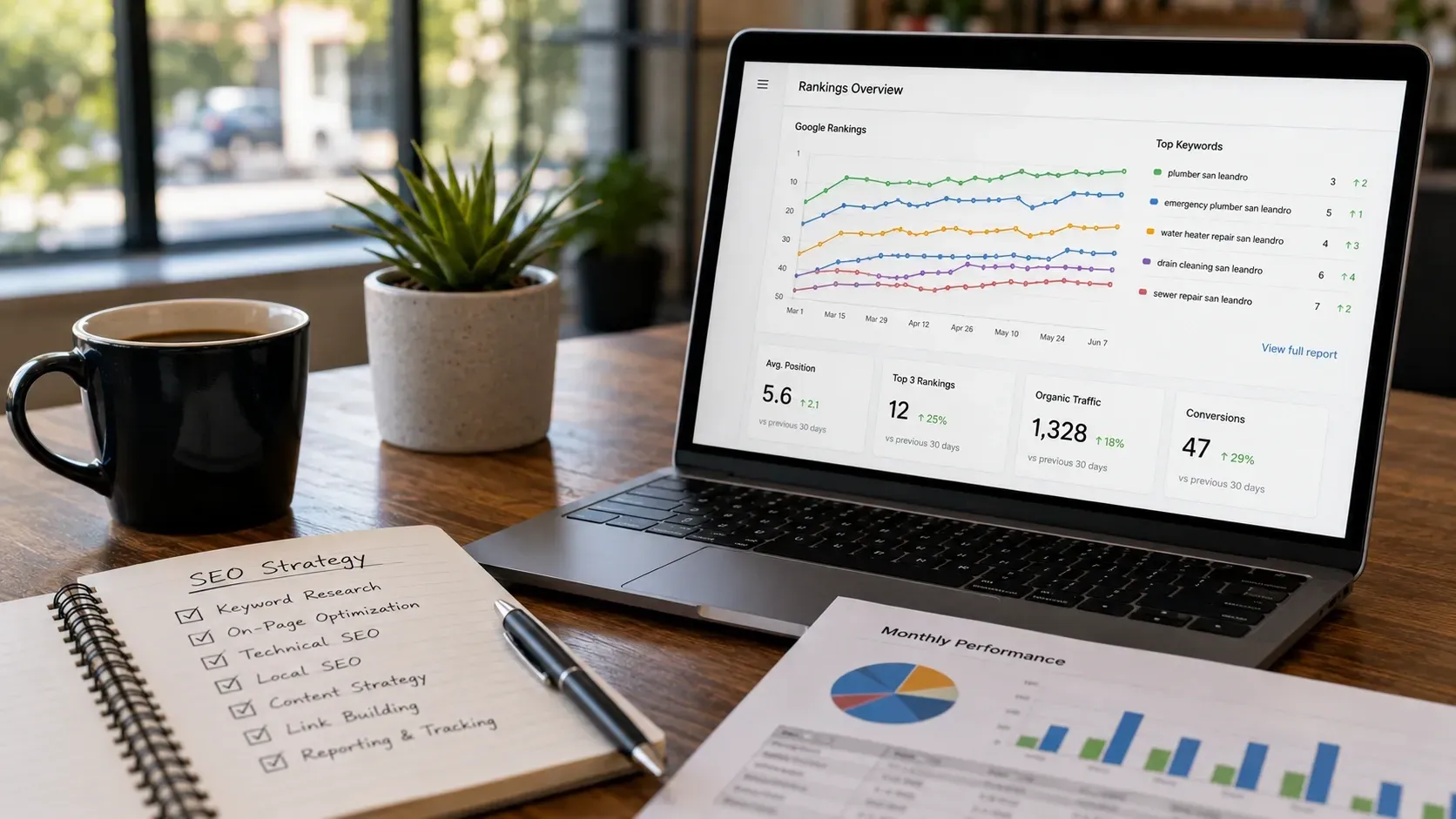
Traditional SEO runs on an even longer clock. A well-optimized Google Business Profile combined with consistent citation building and active review generation can work to move a local business toward stronger map results over time. In competitive Bay Area markets, that's realistically a multi-month effort at minimum, and the exact trajectory depends on the starting condition of the business's digital foundation.
Local Service Ads and Google Ads produce results faster. A properly structured paid campaign can begin generating qualified calls relatively soon after launch, though actual outcomes depend on the specific market, the offer, and how well the campaign is built. That speed is real. So is the dependency it creates.
If you need leads this week, paid ads are the honest answer. If you're building a business that owns its local search category for the next several years, SBO and organic SEO are where the real return lives.
The SBO Decision Framework: When to Use It, When to Pair It, and When to Hold Off
Use this as a practical starting point for evaluating whether SBO is the right primary investment right now.
SBO works best as your primary channel when your customers actively search for your service category rather than discover it through social media. It fits businesses with a defined geographic market, such as a specific city or Bay Area metro corridor, and works particularly well when you want visibility that persists beyond a campaign budget cycle.
Pair SBO with paid ads when you need immediate leads while the SBO signal builds, when you're entering a new market, or when you want to test which keyword phrases actually convert before committing to long-term optimization.
Hold off on SBO as your primary investment when your business model is national or e-commerce with no meaningful local search intent, when you haven't defined which search terms your customers actually use, or when your website and Google Business Profile aren't yet in functional shape.
That third condition is the one most businesses skip. SBO placed on top of a broken digital foundation won't convert. Before any channel investment, your business listings and voice search presence need to be accurate and consistent across directories. That's the infrastructure the traffic lands on, and it has to be solid before visibility work begins.
What SBO Doesn't Do and Why That Matters
SBO is not a reputation management tool. Full stop.
It doesn't generate reviews, resolve negative feedback, or build the social proof that converts a curious searcher into a paying customer. A business can appear in autocomplete for exactly the right phrase and still lose the click to a competitor with a polished Google Business Profile and a stack of five-star reviews.
This is why review generation and reputation management runs parallel to SBO in any serious local marketing strategy. The autocomplete placement gets you seen. The reviews and ratings get you chosen. You need both working together.
SBO also doesn't fix a website that doesn't convert. If the landing experience is slow, confusing, or inaccessible to users with disabilities, the traffic SBO generates will bounce without producing a lead. Website accessibility and conversion performance aren't optional additions. They're the floor everything else stands on.
The most expensive mistake in local digital marketing isn't choosing the wrong channel. It's running the right channel without the infrastructure to convert the leads that arrive.
Ready to See Where Your Business Actually Stands?
You're spending money on digital marketing, watching the reports, and still wondering why the phone isn't ringing. That's the problem worth solving, and it starts with an honest look at which channel fits your situation right now.
UPM Digital Media has been building digital marketing expertise for more than 25 years. The team comprises growth-driven local marketing experts living in nearly every state across the United States and all across the globe. Every client gets a dedicated account manager and a strategy built around their specific business goals, not a package pulled off a shelf.
The process starts with understanding your business, your target market, and your goals before a single tactic gets recommended. Depending on those objectives, the team implements the services that actually fit, whether that's SEO, paid advertising, reputation marketing, website design, business listings, or accessibility compliance.
Their pay-per-result SEO model runs at $650 to $950 per month when your chosen terms are ranked, and nothing if they're not. Getting to page one of Google for your chosen search terms is the bar they're working to hit, and you don't pay until it happens.
Call 415-731-9764 or toll-free at 888.449.3239. Free 30-minute consultations are available Monday through Friday, 9:00 AM to 5:00 PM Pacific.
Frequently Asked Questions
How is Search Box Optimization different from regular SEO?
Regular SEO earns your business a ranking on the results page after a user completes their query. SBO places your brand or keyword phrase in the autocomplete suggestions that appear while the user is still typing. They work at different stages of the search process. The strongest local strategies use both together rather than treating them as substitutes.
Can a small Bay Area business realistically compete in autocomplete against larger brands?
Yes, particularly on locally specific phrases. Large national brands rarely optimize for hyper-local terms like "emergency plumber Redwood City" or "family dentist San Mateo" with the same precision a local business can. Smaller businesses can own autocomplete for the exact terms their customers use because larger competitors typically aren't targeting those phrases at the neighborhood level.
How long does it take to see results from SBO?
The timeline varies depending on how competitive the target phrase is, how consistently the signal work is maintained, and how the search engine weighs local query patterns at any given point. Autocomplete placement could build over several weeks to a few months in moderately competitive markets, and potentially longer in denser Bay Area markets. It's not instant, and anyone promising same-week placement should be questioned carefully about their actual process.
What happens to my SBO placement if I stop the service?
Unlike paid ads that stop the moment budget runs out, SBO placement may persist for a period after active optimization ends because the signals that built the placement don't disappear immediately. Without ongoing maintenance, competitors who continue building their own signals around the same terms can eventually displace you. Treating SBO as a one-time project rather than an ongoing investment creates that risk over time.
Is SBO worth pursuing if I'm already running Google Ads?
They serve different purposes. Google Ads buy traffic while the campaign runs. SBO builds brand presence inside the search environment itself. Running both simultaneously is often the right approach during the SBO build phase, with paid spend adjusting as organic and autocomplete visibility grows over time.
What should I fix before investing in SBO?
Your Google Business Profile, your business listings consistency across directories, and your website's basic conversion experience are the three areas to address first. SBO drives visibility, but if the infrastructure it points to is broken or unconvincing, the traffic won't convert. Getting those foundations right is what separates a productive channel investment from an expensive disappointment.
Does UPM Digital Media offer SBO as a standalone service or as part of a broader strategy?
Every client is paired with a dedicated account manager who develops a customized strategy based on their specific goals and market situation. Whether SBO makes sense as a standalone investment or as part of a broader combination of services depends on the client's timeline, competitive landscape, and existing digital foundation. The free 30-minute consultation is the right starting point for that conversation.
The businesses that dominate local search across the Bay Area aren't the ones with the biggest ad budgets. They're the ones that understand which tool does what, build the right foundation, and execute consistently over time. Explore the full range of services at UPM Digital Media, or call today to start with a direct conversation about your specific situation.
About the Author
Les Ong is a marketing consultant and entrepreneur with more than 25 years of experience in the digital media space. He specializes in helping small-to-medium-sized businesses compete with larger organizations using growth-driven marketing strategies, with a particular focus on Search Box Optimization, local SEO, and pay-per-result approaches. Les founded UPM Digital Media and works with a team of local marketing experts operating across the United States and internationally.